


Der Frühling ist da — und mit ihm die beste Jahreszeit für Maker und DIY-Fans. Die Tage werden länger, der Balkon ruft und die Werkstatt ist endlich wieder ein angenehmer Arbeitsplatz. Wenn du deinen 3D-Drucker aus dem Winterschlaf holst (oder er wie bei den meisten von uns durchgelaufen ist), dann haben wir hier fünf Projekte, die perfekt in die Saison passen.
Ob Gartenhelfer, Werkstatt-Upgrade oder Balkonkraftwerk-Zubehör — diese Projekte sind praktisch, machen Spaß und zeigen, was 3D-Druck im Alltag leisten kann.
Projekt 1: Pflanzenhalter und Anzuchttöpfe für den Balkon
Der Frühling ist Anzuchtzeit. Statt teure Plastiktöpfe aus dem Baumarkt zu kaufen, druckst du dir deine eigenen — genau in der Größe, die du brauchst. Besonders praktisch: Halterungen für das Balkongeländer, die exakt auf deinen Handlauf passen.
Material-Tipp: Für Outdoor-Einsatz empfiehlt sich PETG statt PLA. PETG ist verzieht sich bei Sonneneinstrahlung nicht so schnell. PLA kann bei direkter Sonne auf dem Südbalkon schon nach wenigen Wochen weich werden und seine Form verlieren.
Druckeinstellungen: PETG bei 230–240 °C Nozzle-Temperatur, 70–80 °C Bett. Wandstärke mindestens 1,6 mm für Stabilität bei Wind und Wetter. Infill 20–30 % reicht für die meisten Pflanzenhalter.
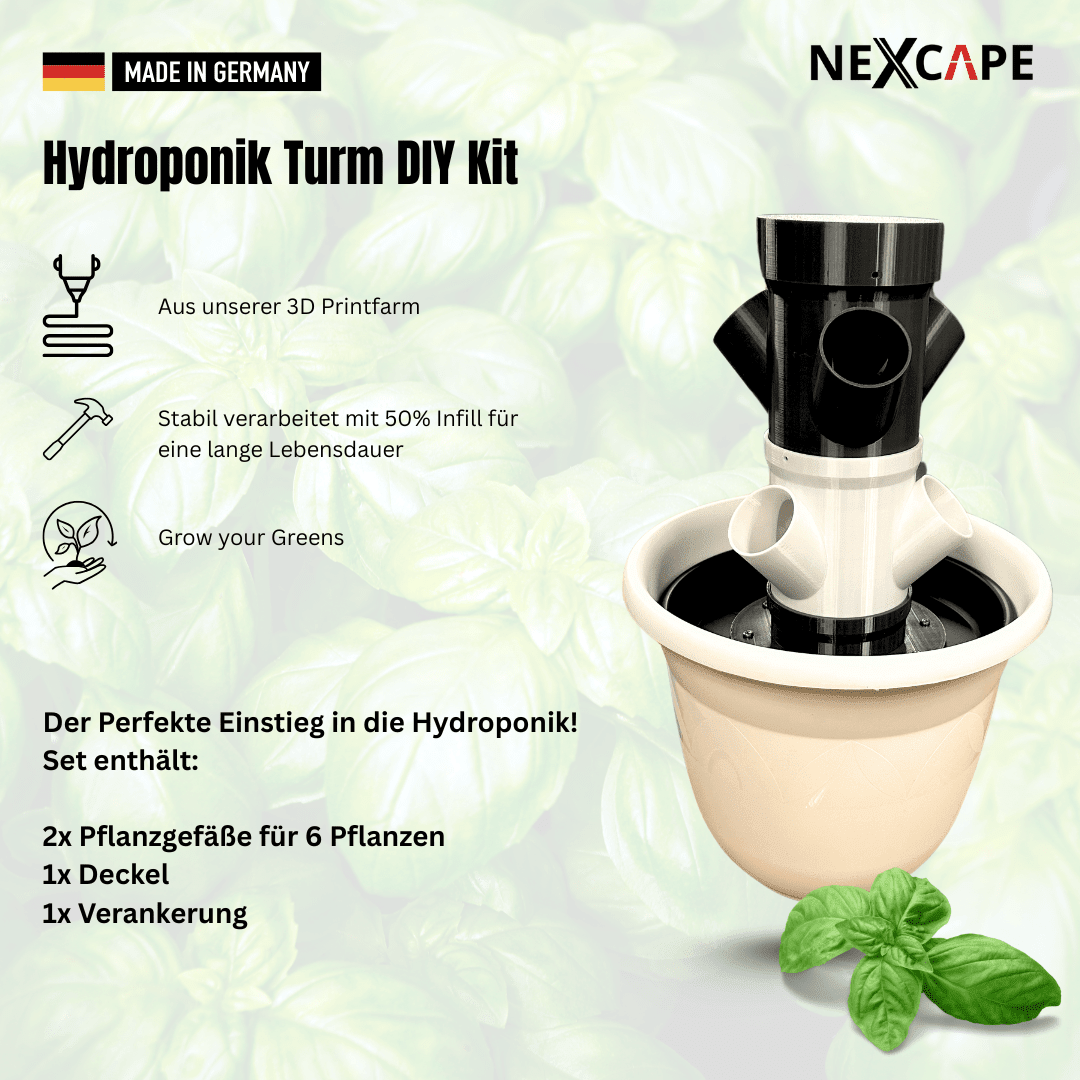
Wer keine Lust hat, selbst zu designen: In der NEXCAPE Hydroponik-Kategorie findest du fertige Lösungen für den Indoor-Anbau — vom Hydroponik-Turm bis zum Zubehör.
Hydroponik & Garten bei NEXCAPE
Projekt 2: Kabelmanagement fürs Balkonkraftwerk
Hast du ein Balkonkraftwerk? Dann kennst du das Problem: Kabel, die irgendwie am Geländer entlangbaumeln, sehen nicht nur unschön aus, sondern können auch durch Scheuern an Kanten beschädigt werden. Mit dem 3D-Drucker erstellst du passende Kabelführungen und Clips, die genau auf dein Geländerprofil zugeschnitten sind.
Wenn das Kabel nicht nur am Gelaender entlang, sondern durchs Dach soll: Wie es dort ohne Scheuerstelle unter den Ziegel kommt, steht im Leitfaden zur Kabelfuehrung durchs Ziegeldach.
Praxis-Tipp: Miss dein Geländerprofil genau aus und drucke zuerst einen Testclip. Nichts ist frustrierender als 20 Clips zu drucken, die dann nicht passen. Gib 0,2–0,3 mm Toleranz zu, damit die Clips sicher sitzen, aber nicht klemmen.
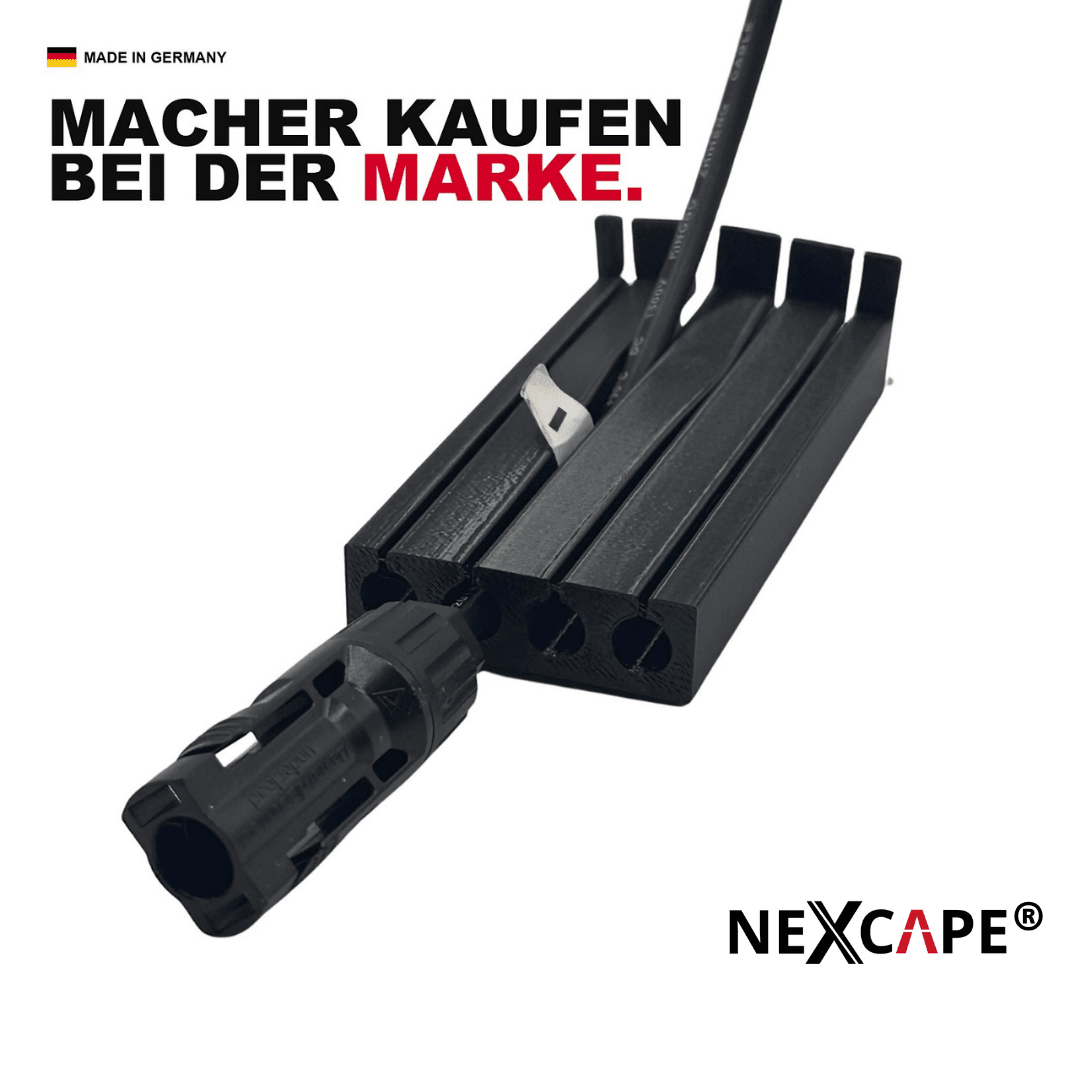
Für die professionelle Kabelführung vom Dach in den Innenraum gibt es übrigens speziell konstruierte PV-Kabeldurchführungen — damit das Kabel sauber und geschützt durch den Dachziegel läuft.
PV-Kabeldurchführung bei NEXCAPE
Projekt 3: Werkzeughalter für die Werkstatt — Ryobi & Co.
Mit den ersten warmen Tagen beginnt auch die Werkstatt-Saison. Und seien wir ehrlich: Eine aufgeräumte Werkstatt macht einfach mehr Spaß. 3D-gedruckte Werkzeughalter sind der perfekte Einstieg. Besonders beliebt in der Community: Halterungen für Ryobi ONE+-Akkugeräte, die sich an die Wand oder eine French Cleat-Leiste montieren lassen.
Wie eine komplett ausgerüstete Heimwerkstatt mit Akkugeräten und eigener PV-Anlage aussieht, zeigt Deine Werkstatt, dein Kraftwerk.
Fertig gedruckt gibt es die gaengigen Halterungen auch bei uns — die Top 5 Ryobi-Upgrades zeigen, was sich in der Praxis bewaehrt hat.
Warum das so gut funktioniert: Ryobi-Geräte haben standardisierte Akku-Schnittstellen, und die Community hat längst passende Halterungen designt. Du kannst sie an deine Wandsituation anpassen — kein universeller Halter aus dem Baumarkt passt so gut wie einer, der exakt für deine Wand und dein Gerät gedruckt wurde.
Material: PLA reicht für die Werkstatt völlig aus, solange die Halter nicht in der prallen Sonne hängen. Für besonders schwere Geräte: Infill auf 40–50 % erhöhen und 3 Perimeter verwenden.
Du willst keine Halterungen selbst drucken? Im NEXCAPE-Shop gibt es fertige Ryobi-Zubehörteile aus dem 3D-Drucker — direkt einsatzbereit.
Projekt 4: GraviTrax-Erweiterungen für Regentage
Frühling heißt auch: Regentage. Und wenn du Kinder hast (oder selbst GraviTrax-Fan bist), dann sind 3D-gedruckte Erweiterungen ein großartiges Projekt für verregnete Nachmittage. Custom-Kurven, erhöhte Stützen oder komplett neue Bahnelemente — die Möglichkeiten sind endlos.
Welche Hoehen und Kurven eine Bahn wirklich braucht — und welche Sets das abdecken —, klaert der Guide zum Erweitern der GraviTrax-Bahn.
Kompatibilitäts-Hinweis: GraviTrax-Teile erfordern hohe Maßgenauigkeit. Drucke mit 0,15 mm oder 0,2 mm Layerhöhe und kalibrier deinen Drucker vorher sauber. PLA funktioniert hier am besten, weil es weniger schrumpft als PETG und die Teile sauber ineinandergreifen.
Farbtipp: Druck in verschiedenen Farben macht die selbstgebauten Teile sofort erkennbar — und sieht einfach cool aus.
Keine Lust auf Drucken? Fertige GraviTrax-Erweiterungen findest du im NEXCAPE-Shop.
Projekt 5: Autozubehör für die erste Frühlingsfahrt
Der Frühling lädt zur Ausfahrt ein — und dein Auto kann ein paar 3D-gedruckte Upgrades vertragen. Handyhalterungen, Brillenablagen, Getränkehalter-Adapter oder Kabelclips für das Ladekabel: Alles Dinge, die du in 30 Minuten drucken und sofort nutzen kannst.
Wie passgenaues Autozubehör gegen Universal-Loesungen abschneidet, zeigen wir am Beispiel Mazda MX-5 und Fiat 124 Spider: Getränkehalter und Handyhalter, die wirklich sitzen.
Material-Empfehlung: Im Auto wird es im Sommer heiß — PLA verformt sich ab ca. 55 °C. Für Teile, die auf dem Armaturenbrett oder in der Windschutzscheibe liegen, nimm PETG oder ASA. Für geschützte Bereiche (Mittelkonsole, Türfach) reicht PLA.
Auch hier gibt es bei NEXCAPE fertige Lösungen, falls der Drucker gerade anderweitig beschäftigt ist.
Welches Material für welches Projekt?
Kurz zusammengefasst: PLA ist das Allround-Material für Innenräume und geschützte Bereiche. Sobald UV-Strahlung, Hitze oder Feuchtigkeit ins Spiel kommen, greif zu PETG. Beide Materialien lassen sich auf den meisten Consumer-Druckern problemlos verarbeiten.
Faustregel: drinnen PLA, draußen oder bei Wärme PETG. Wenn du dir bei einem konkreten Teil unsicher bist, schreib uns kurz — wir sagen dir, womit wir es selbst drucken würden.
Los geht’s — dein Frühlingsprojekt wartet
Der 3D-Drucker ist das perfekte Werkzeug für den Frühling: praktische Projekte, kreative Freiheit und das gute Gefühl, etwas Selbstgemachtes zu nutzen. Ob Balkonbegrünung, Werkstatt-Organisation oder Kabelmanagement — starte jetzt dein erstes Frühlingsprojekt.
Und wenn du fertige 3D-Druck-Produkte suchst, die direkt einsatzbereit sind: Im NEXCAPE-Shop findest du alles von PV-Zubehör über Ryobi-Halterungen bis zu GraviTrax-Erweiterungen.
Alle Produkte bei NEXCAPE entdecken
Fragen oder Ideen? Schreib uns an support@nexcape.de oder ruf an unter 07054 927999 — wir freuen uns auf dein Feedback!
Alle Produktempfehlungen beziehen sich auf das aktuelle NEXCAPE-Sortiment. Druckeinstellungen sind Richtwerte und können je nach Drucker und Filament variieren.
Aus unserer Manufaktur: Unsere Bestseller · 3D-gedrucktes Zubehör
Markenrechtshinweis: Genannte Produkt- und Markenbezeichnungen Dritter sind Eigentum der jeweiligen Inhaber. Die Nennung dient ausschließlich der Beschreibung der Produktkompatibilität (§ 23 MarkenG / Art. 14 EU-MarkenVO). Es besteht keine geschäftliche Verbindung zwischen NEXCAPE® (Roos Enterprises UG, Wildberg) und den genannten Herstellern. Unser Zubehör ist ein eigenständiges, in Deutschland 3D-gedrucktes Produkt.