


25-year warranty – but what does that really mean?
Most solar modules come with a 25-year performance warranty. That sounds impressive, but what's behind it? The manufacturer guarantees that the module will still deliver at least 80–85% of its nominal power after 25 years. So, the system doesn't simply stop working – it slowly becomes a little less efficient.
In practice, many systems run without problems for over 30 years. What's crucial is not just the module, but the entire system – and that's often where the weak points lie.
What really ages: the underestimated components
Inverters: The power electronics have a shorter lifespan than the modules – typically 10–15 years. Replacing an inverter during the system's operation is normal and should be budgeted for.
DC cables: PV cables are designed for decades of outdoor use. Their weak point is not the cable itself, but the areas where it is exposed to mechanical stress – especially at the roof penetration and over sharp roof edges. Those who cut corners during installation here will pay for repairs later.
Connectors (MC4): Oxidation and poor contacts are a common source of errors. High-quality, properly crimped connectors last decades. Cheap or incorrectly installed ones do not.
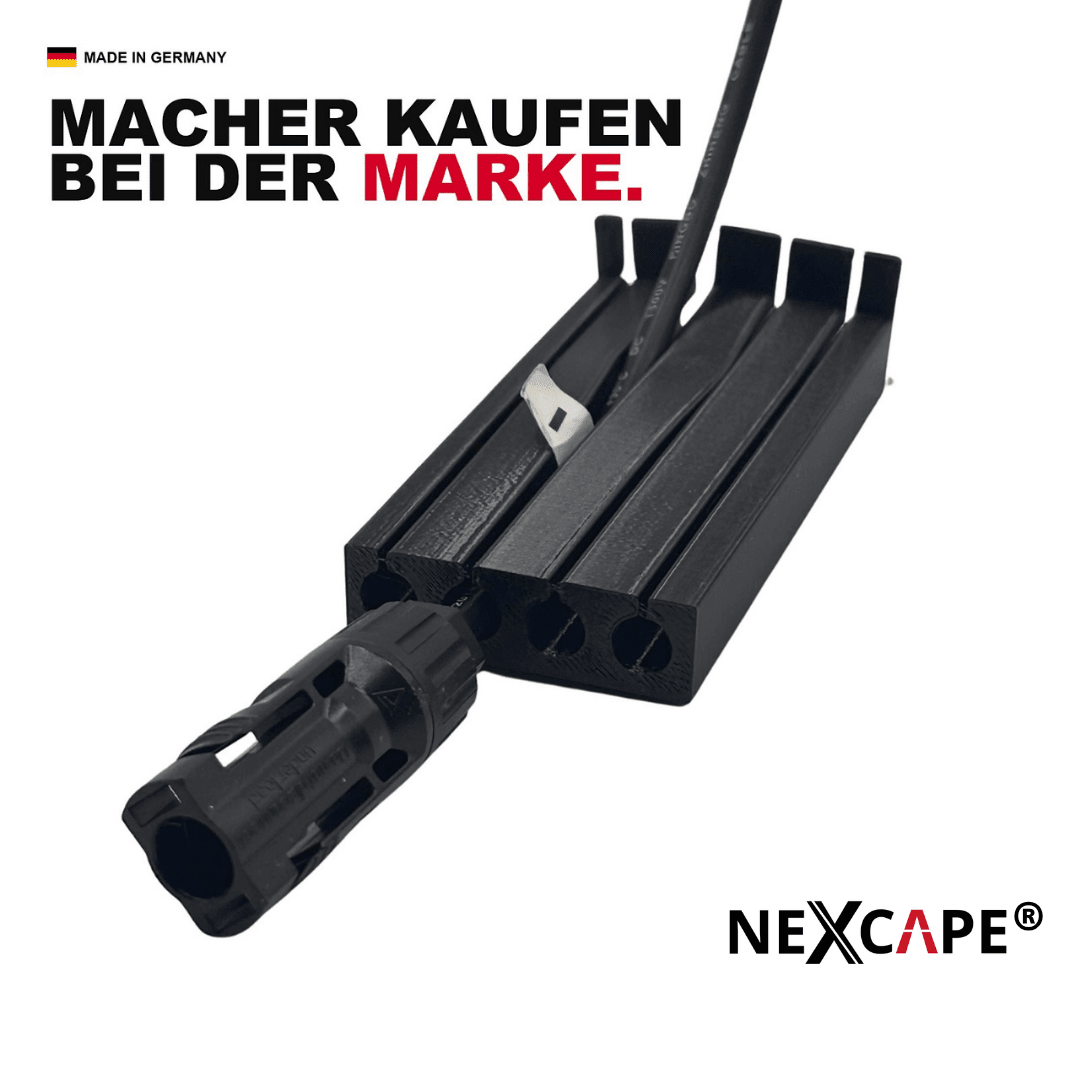
Roof penetration: Cheap seals become brittle after a few years. A good cable gland with an abrasion-resistant cable sleeve not only protects against moisture ingress but also against mechanical wear of the cable itself.
Maintenance: What you can do yourself
Annual visual inspection (autumn):
- Are the modules clean? Soiling by moss, leaves, or bird droppings can noticeably reduce yields.
- Are all cable connections still tight and visibly undamaged?
- Is the roof penetration still sealed? Has no water entered?
- Does the monitoring app show normal yields compared to the previous year?
Every 5 years (by a specialist company):
- Insulation measurement of the DC cables
- Thermographic imaging of the modules (shows hot spots and defective cells)
- Checking all connectors
When is a system refurbishment worthwhile?
If the inverter fails after 12–15 years, replacement is almost always worthwhile – new devices are more efficient and often cheaper than repairs. If the modules still function well after 20+ years, expanding the system may be more sensible than a complete replacement.
A good PV system that was properly installed from the beginning – with correct cable routing, secure penetration, and clean connection – will incur minimal maintenance over 25 years.
Conclusion
PV systems last a long time – if they are well built. The crucial weak points are not the modules, but inverters, cable connections, and roof penetrations. Those who pay attention to quality here will save themselves expensive surprises in 15 years.
In the NEXCAPE® shop, you will find cable glands that have been developed for precisely this long-term stress.
So that your solar cables last as long as the system: PV roof penetrations permanently protect the insulation from abrasion.