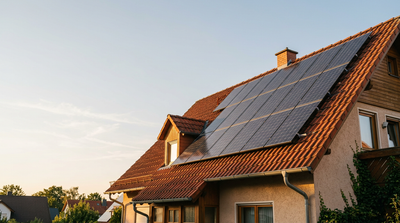



Do you have a balcony power plant and want to route the cables neatly through the roof? Good decision! Because loose cables on the facade not only look unsightly - they are also susceptible to weather damage and mechanical abrasion. In this guide, we'll show you step-by-step how to route your PV cables professionally and securely through the roof tile.
Why cables through the roof and not through the wall?
Many balcony power plant owners initially route their cables temporarily through a window or through a wall drilling. This works – but it is not a good long-term solution. The roof penetration offers clear advantages:
- Shorter cable path: The PV modules are on the roof – the direct path inside is through the roof tile
- No drilling into the facade: You avoid thermal bridges and potential moisture damage
- Professional appearance: No visible cables on the house wall
- Better cable protection: The roof penetration protects against abrasion from wind and weather
What you need
For neat cable routing through the roof, you need:
- A PV cable roof penetration – suitable for your number of cables (e.g. 2PV or 4PV)
- A roof tile that is temporarily removed
- No special tools – assembly is completely tool-free
Tip: The NEXCAPE® roof penetrations are specially designed for pitched roofs with tiles. The MC4 connector remains installed – you don't have to disassemble anything.
Step-by-step guide
Step 1: Remove roof tile
Carefully lift the roof tile at the desired spot and slide it upwards. With most tile types (Frankfurter Pfanne, Biberschwanz, Doppelmuldenfalzziegel), this can be done without tools.
Step 2: Hook in roof penetration
Insert the roof penetration where the tile was. It is simply hooked into the battens – just like a normal roof tile. This only takes a few seconds.
Step 3: Route cables
Route your PV cables (and optionally the grounding cable) through the designated openings. The MC4 connector fits through without you having to remove it.
Step 4: Done!
The roof penetration is in place, the cables are protected, and everything looks professional from the outside. The entire assembly takes less than 5 minutes.
Avoid common mistakes
- Do not kink cables: PV cables have a minimum bending radius. Make sure you don't lay them too tightly.
- No provisional solutions: Silicone, construction foam, or adhesive tape on the roof are not permanent solutions and can cause moisture damage.
- Choose the right variant: Count beforehand how many cables you need to route (2PV, 4PV, 6PV – with or without PE grounding).
What types of roofs is this suitable for?
The roof penetration works on pitched roofs with tile roofing. This includes the most common roof tile types such as Frankfurter Pfanne, Biberschwanz, Doppelmuldenfalzziegel, and similar.
Conclusion
Forget about window penetrations – if you want to install your balcony power plant professionally, route the cables through the roof. With NEXCAPE® roof penetrations, this takes just a few minutes, without tools. Check out our solar products and start your project today!
Matching product: View PV Roof Penetration Balcony Power Plant Complete Set
Matching PV roof penetrations from our factory: All PV roof penetrations · DIY variant without MC4 removal · 125 mm for Frankfurter Pfanne · 150 mm for almost all roof tiles