

When the Inverter Suddenly Complains
You look at your PV monitoring app in the morning and see a red message: insulation fault, GFCI alarm, or simply inexplicably low yields. Before you immediately call a technician: in many cases, a cable fault is behind it – and as an attentive homeowner, you can often narrow it down yourself.
Typical Error Messages and What They Mean
Insulation Fault / Iso Alarm: The inverter measures the resistance between the DC lines and ground. If this value drops, it indicates damaged insulation. A common cause: worn cable insulation at a roof edge or roof penetration.
GFCI Trip (Ground Fault Circuit Interrupter): Similar to the insulation fault – the protective switch has detected an unexpected current path. Can indicate damaged outer insulation, through which current flows when wet.
Unexpectedly Low Yields: If a string consistently produces less than it should, increased resistance due to cable damage or poor connections can be the cause.
Where You Should Look First
Cable damage almost always occurs at the same points:
- Roof Penetration: The point where the cable passes through the tile or the roof membrane. Here, the cable rubs during wind and temperature changes. Look from inside to see if the cable insulation at this point is changed, discolored, or indented.
- Cable Clamps and Connectors: MC4 connectors can oxidize or loosen. A poor contact heats up and damages the insulation from the inside.
- Cable Fasteners on the Roof: Cable ties that are too tight cut into the insulation. This happens slowly and is only visible after years.
- Areas with Water Ingress: Where moisture permanently acts on the cable, the degradation of the insulation accelerates.
What You Can Check Yourself – and What You Can't
Visual inspection: yes. You can inspect the roof penetration from the inside and – if safely possible – from the outside. Discoloration, visible cracks, or exposed copper are clear warning signs.
Insulation measurement: only with the right device. A normal multimeter is not sufficient for this. If you don't have an insulation tester, leave the measurement to a specialist company.
Voltage measurements on DC lines: never without appropriate training. DC current is significantly more dangerous than AC because it has no zero crossing and arcs do not self-extinguish.
Prevention is Better Than Repair
The best strategy against cable damage is to prevent it from happening in the first place. This primarily means: installing real mechanical protection at the roof penetration – no sealant that dissolves after three years, but a cable gland with an abrasion-resistant sleeve that permanently protects the cable.
Paying attention during installation avoids the most common cause of insulation damage in PV systems on pitched roofs.
Conclusion
Error messages in the inverter are often the first sign that something is wrong in the system. Knowing where cable damage occurs allows for targeted inspection – and early action before a small abrasion damage becomes a bigger problem.
In the NEXCAPE® shop, you will find cable glands that protect exactly where cable damage occurs most frequently.
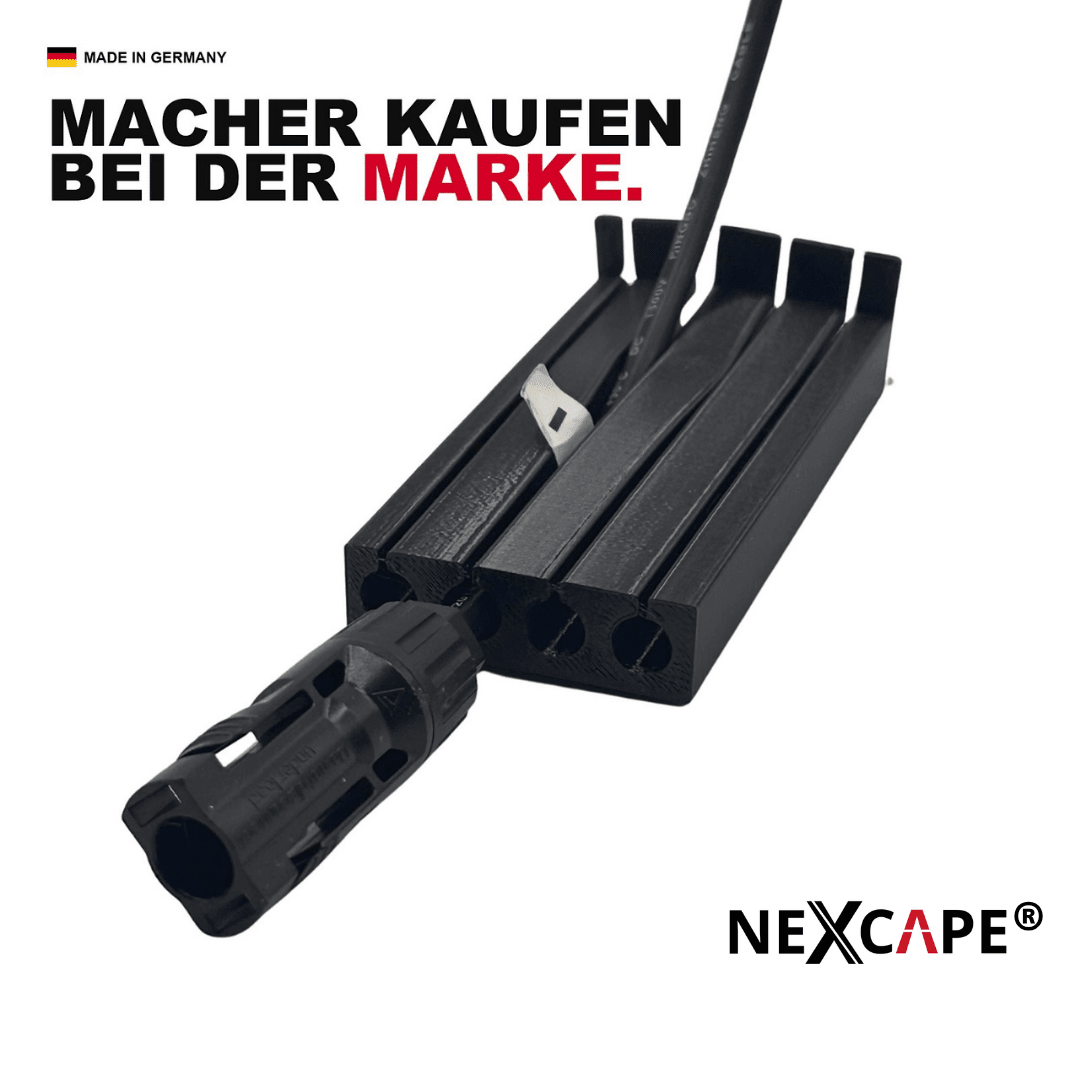
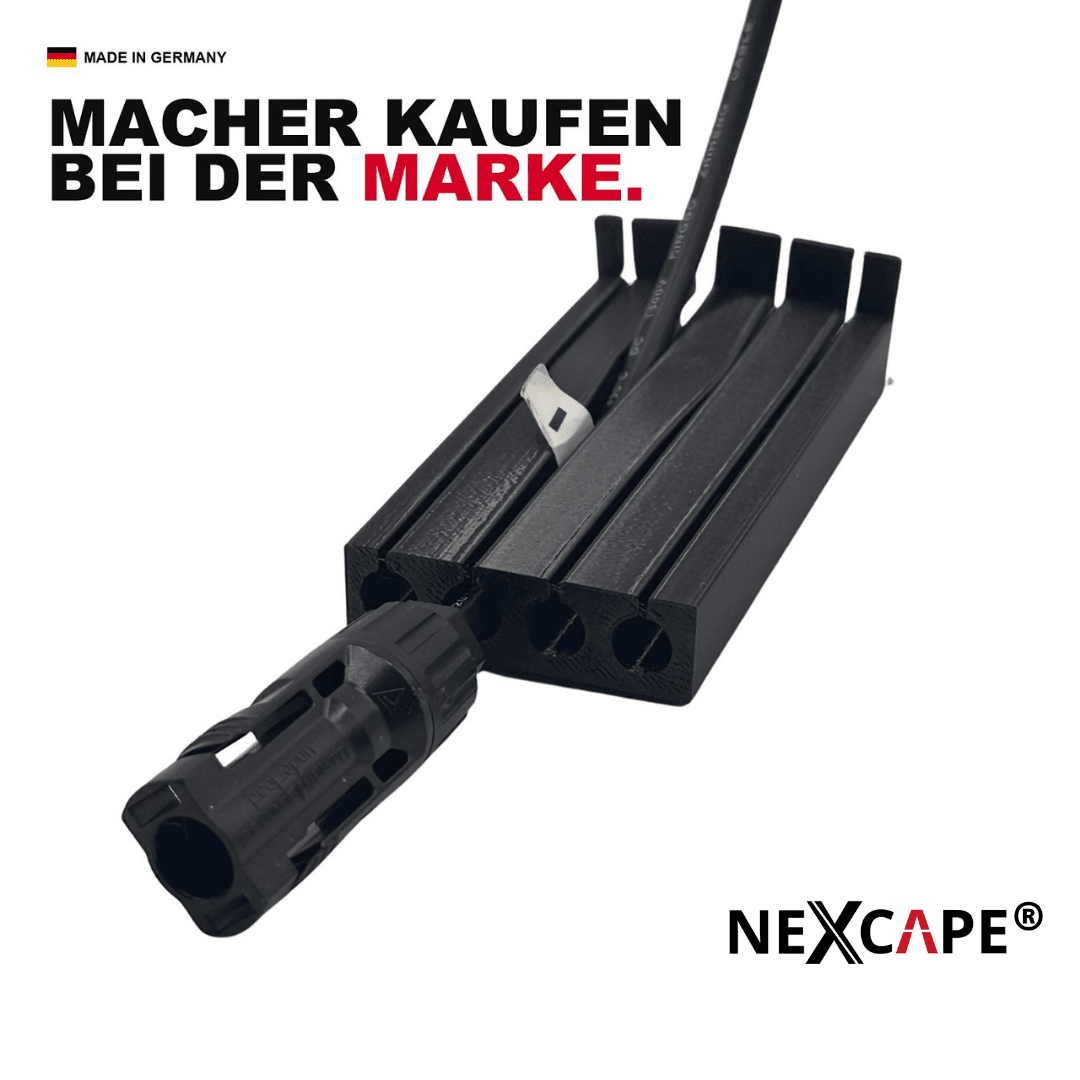
Preventing cable damage instead of searching: A PV roof penetration as abrasion protection prevents chafing at the tile edge.