



Erst die Größe, dann der Kauf
Du willst dein Solarkabel sauber durchs Ziegeldach führen und fragst dich, welche Dachdurchführung passt? Die wichtigste Frage ist die Größe – und die hängt vom Ziegel ab und davon, was durch muss (Kabel mit oder ohne MC4-Stecker, plus Erdung).

105, 125 oder 150 mm – was passt?
Die Angabe in Millimetern steht für die Länge der Durchführung. Wie viel Länge du brauchst, hängt vor allem von der Überlappung deiner Dachziegel ab – und die fällt je nach Eindeckung und Verlegung unterschiedlich aus. Genau dafür gibt es drei Längen:
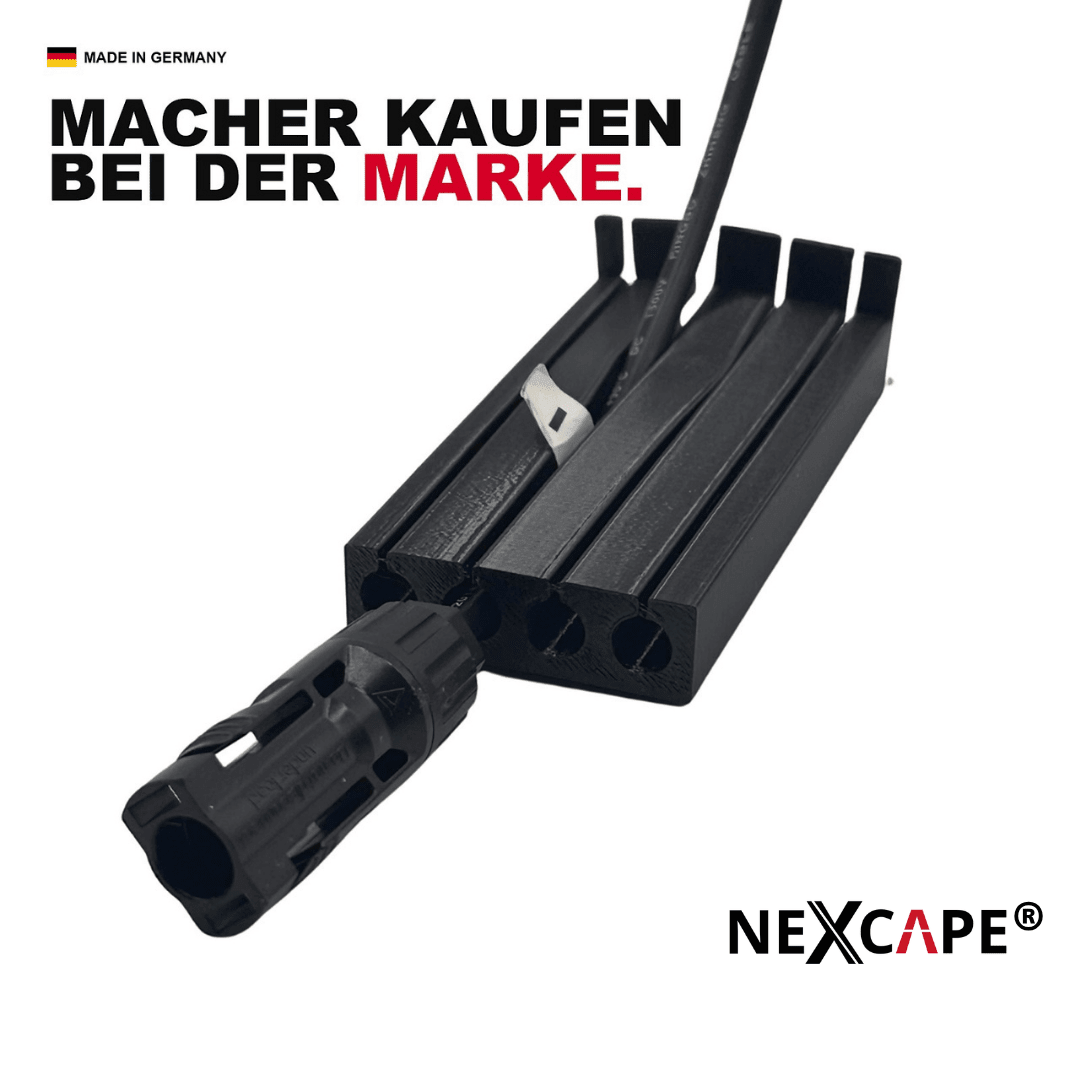
- 105 mm – die kompakte Länge für geringe Überlappung. Reicht für PV-Kabel inklusive montiertem MC4-Stecker.
- 125 mm – mehr Spielraum, häufig die Wahl bei höheren Profilen wie der Frankfurter oder Finkenberger Pfanne.
- 150 mm – die Universal-Größe mit extra Platz, zum Beispiel für mehrere Kabel oder besonders hohe Ziegel.
So misst du die Überlappung – zwei Minuten, und du weißt es sicher
Die Modellnamen weiter unten sind eine grobe Orientierung, keine Zusage. Verbindlich ist nur dein eigenes Maß, denn wie weit sich deine Ziegel überlappen, legt der Dachdecker beim Eindecken über die Lattweite fest – beim selben Ziegelmodell kann das unterschiedlich ausfallen.
- Hebe an der vorgesehenen Stelle den oberen Ziegel an.
- Miss, wie weit er den Ziegel darunter überdeckt. Dieses Maß ist die Überlappung.
- Schick uns den Wert, wenn du unsicher bist – dann sagen wir dir, welche unserer Längen dazu passt.
Warum wir darauf herumreiten: Von den Rücksendungen, die uns zwischen August und September 2026 erreicht haben, war bei jeder einzelnen der Ziegeltyp unbekannt – bestellt wurde, ohne vorher am eigenen Dach zu schauen.
Welcher Ziegeltyp?
Die meisten Fragen macht die Ziegelform. Für die Frankfurter und Finkenberger Pfanne greifen Kunden meist zu 125 oder 150 mm, bei flacheren Ziegeln häufiger zu 105 mm. Das sind Erfahrungswerte aus Bestellungen, keine Passungsgarantie – sicher ist nur das gemessene Maß. Im Zweifel lieber eine Nummer größer – durchführen lässt sich immer, zu klein passt nicht.
Welche Länge für welchen Ziegel?
Wichtig vorab: Die Länge (105/125/150 mm) richtet sich nach der Überlappung deiner Dachziegel – die fällt je nach Eindeckung des Dachdeckers unterschiedlich aus. Der Ziegeltyp ist nur eine grobe Orientierung; im Zweifel die nächstgrößere Länge.
- Frankfurter & Finkenberger Pfanne (hohes Wellenprofil) – meist 125 mm, bei großer Überlappung 150 mm.
- Heidelberger Pfanne (ebenfalls hohes Wellenprofil) – wie die Frankfurter: 125/150 mm.
- Doppelmuldenfalzziegel / Falzziegel (flacheres Profil) – oft 105 mm, bei größerer Überlappung 125 mm.
- Flache Tonziegel & Biberschwanz – hier muss man ehrlich trennen. Bei Biberschwanz-Doppeldeckung liegt die Höhenüberdeckung nach Herstellerangaben typischerweise bei rund 215 bis 235 mm. Das liegt über unserer längsten Ausführung mit 150 mm – dafür haben wir derzeit keine passende Durchführung, und wir haben auch keine freigegebene Einbauanleitung für diesen Fall. Bei flachen Tonziegeln in Einfachdeckung kann es dagegen passen; das hängt an deinem konkreten Maß. Miss in dem Fall die Überdeckung und schick sie uns mit einem Foto – wir sagen dir dann, ob wir etwas Passendes haben.
Wie viele Kabel durch eine Durchführung gehen, bestimmt die Bauform – nicht die Länge. Allen gemeinsam: Die Durchführung sitzt im Ausschnitt der überdeckenden Pfanne und schützt das Solarkabel als Abriebschutz vor der scharfen Ziegelkante – die Regendichtigkeit kommt aus der fachgerechten Eindeckung, nicht aus dem Bauteil.
Muss der obere Ziegel ausgeflext werden?
Das entscheidet nicht die Ziegelfarbe und nicht das Material, sondern die Kopfausbildung: Hat der Ziegel im Bereich der Höhenüberdeckung einen Kopffalz, eine Kopfrippe oder eine Fußrippe, greift er formschlüssig in den Ziegel darunter. Dann muss die Verfalzung ausgespart werden, sonst hebt der obere Ziegel ab. So klassifiziert es die Fachregel des Deutschen Dachdeckerhandwerks (Fassung April 2024).
| Ziegel- bzw. Deckungsart | Kopfausbildung | Oberen Ziegel ausflexen? |
|---|---|---|
| Betondachsteine (Frankfurter, Taunus, Harzer, Doppel-S, Tegalit) | Seitenfalz + Fußverrippung | Ja |
| Flachdach- und Reformziegel | Ringfalz in Höhen- und Seitenüberdeckung | Ja |
| Doppelmuldenfalz-, Reform- und Verschiebeziegel | Kopffalz oder Kopfrippe + Fußrippe | Ja |
| Hohlpfanne, Krempziegel / Doppelkremper | nur seitlich übergreifend, kein Kopffalz | Kein Falz zum Schneiden – bitte vorher prüfen lassen |
| Mönch-Nonne | Auflagerdeckung, kein Kopffalz | Kein Falz zum Schneiden – bitte vorher prüfen lassen |
Kurz gesagt: Beim heute üblichen Sortiment – also bei praktisch allen Betondachsteinen und allen verfalzten Tonziegeln – wird ausgeflext. Ohne Kopfverfalzung sind nur die gewölbten Ziegel.
Wichtig und ehrlich: Dass bei Hohlpfanne, Krempziegel und Mönch-Nonne kein Falz im Weg ist, heißt noch nicht, dass unsere Durchführung dort ohne Nacharbeit in den Hohlraum unter dem Ziegel passt – das haben wir nicht vermessen und sagen es deshalb auch nicht zu. Schick uns in dem Fall kurz ein Foto deines Ziegels, dann sehen wir gemeinsam nach.
Worauf du beim Material achten solltest
Auf dem Dach herrscht Dauer-UV, Hitze und Kälte. Material, das verprödet, wird zum Problem. Unsere Durchführungen sind aus TPU, Made in Germany – flexibel und schlagfest. So liegt das Kabel dauerhaft geschützt, statt frei an der Ziegelkante zu scheuern.
FAQ
Muss ich den MC4-Stecker abschneiden? Nein – unsere Durchführungen sind so gebaut, dass der Stecker komplett durchpasst.
Welche Größe fürs Balkonkraftwerk? 105 mm reicht in den meisten Fällen; bei höheren Ziegeln 125 mm.
Dichtet die Durchführung das Dach ab? Nein – sie ist ein reiner Abriebschutz: Sie legt sich zwischen Solarkabel und Ziegelkante und bewahrt die Kabel-Isolierung dauerhaft vor dem Durchscheuern. Die Regendichtigkeit kommt wie üblich aus der fachgerechten Ziegeldeckung – nicht aus dem Bauteil.
Welche Durchführung für die Heidelberger Pfanne? Wie bei der Frankfurter Pfanne: meist 125 mm, bei großer Ziegel-Überlappung 150 mm – die Länge richtet sich nach der Überlappung, nicht nach der Kabelzahl.
Und beim Doppelmuldenfalzziegel / Falzziegel? Durch das flachere Profil oft 105 mm; bei größerer Überlappung 125 mm.
Fazit
Erst die Überlappung messen, dann die Länge wählen – 105, 125 oder 150 mm, alle aus TPU, Made in Germany. Schau dir die passenden PV-Dachdurchführungen an und finde die richtige Größe für dein Dach.
Direkt zur passenden Größe
- PV-Dachdurchführung 105 mm – die kompakte Variante
- PV-Dachdurchführung 125 mm – für die Frankfurter Pfanne
- PV-Dachdurchführung 150 mm – universell für die meisten Ziegel
- 4er-Set mit Kabelclips – fürs Balkonkraftwerk mit 2 Modulen
Größe steht? Dann geht es ans Einbauen: In unserer Anleitung Dachziegel für die PV-Kabeldurchführung ausschneiden – Schritt für Schritt zeigen wir dir, wie du den Ziegel sauber anpasst – ohne die MC4-Stecker abzubauen.
Welche PV-Dachdurchführung passt zu mir? (Überblick)
Wähle nach Ziegeltyp, Kabelanzahl und Kabelquerschnitt. Alle Varianten aus TPU, Made in Germany – die vormontierten Stecker bleiben dran. Sie schützen das Solarkabel vor Abrieb an der Ziegelkante.
| Variante | Ziegel/Dach | Kabel | Querschnitt | Ideal für |
|---|---|---|---|---|
| Heimwerker ohne MC4 | gängige Ton-/Pfannenziegel | 1–2 | bis 6 mm² | Eigenheim-Aufdach, Montage ohne Stecker-Abbau |
| Balkonkraftwerk ohne Stecker-Demontage | Ziegeldach (Aufdach) | 1–2 | bis 6 mm² | Steckersolar aufs Ziegeldach |
| 105 mm geschlitzt 16 mm² | gängige Ziegel | 1–2 | bis 16 mm² | stärkere Querschnitte, schmale Bauform |
| Profi ohne MC4, 16 mm² + Erdung | gängige Ziegel | 2–4 | bis 16 mm² + PE | professionelle Installation mit Erdung |
| 150 mm Universal | gängige Ziegel/Pfannen | mehrere | bis 16 mm² | mehrere Kabel, größte Bauform |
| 125 mm Frankfurter Pfanne | Frankfurter Pfanne | 1–2 | bis 6 mm² | speziell auf die Frankfurter Pfanne abgestimmt |
Unsicher beim Ziegeltyp oder Querschnitt? Im Zweifel die nächstgrößere Bauform wählen – oder kurz fragen, wir helfen bei der Auswahl.
Mit Erdungskabel? Wenn neben den PV-Kabeln auch ein Erdungs-/PE-Kabel mit aufs Dach muss, zeigt dir unser Spezial-Ratgeber, wie du beides sauber durch eine Durchführung legst: PV-Kabel und Erdung gemeinsam durchs Ziegeldach führen.
Mehr zum Hintergrund: Warum die Dachdurchführung dein Solarkabel vor Abrieb an der Ziegelkante schützt.
Übrigens entscheidet neben der Größe auch die Anzahl der Kabel über die richtige Variante: Ob 2 oder 4 Kabel die passende Wahl sind, klärt unser Ratgeber „Wie viele Solarkabel passen durch eine PV-Dachdurchführung?".
Du willst das ganze Thema an einem Ort? Unser kompletter Ratgeber: PV-Solarkabel sicher durchs Ziegeldach führen (2026) bündelt Größenwahl, Einbau, Materialkunde und FAQ – mit allen Detail-Anleitungen verlinkt.
Direkt zur Auswahl: Welche Länge auf dein Dach passt, wie die Montage in drei Schritten abläuft und welche Spar-Sets es gibt, steht gebündelt auf Solarkabel durchs Ziegeldach führen.
Noch unentschlossen? Die Kaufberatung: PV-Kabeldurchführung fürs Ziegeldach im Vergleich stellt die Varianten (mit und ohne MC4-Ausbau, 105/125/150 mm, mit Erdungsdurchlass) nebeneinander und nennt je Dachsituation die passende.
Markenrechtshinweis: Genannte Produkt- und Markenbezeichnungen Dritter sind Eigentum der jeweiligen Inhaber. Die Nennung dient ausschließlich der Beschreibung der Produktkompatibilität (§ 23 MarkenG / Art. 14 EU-MarkenVO). Es besteht keine geschäftliche Verbindung zwischen NEXCAPE® (Roos Enterprises UG, Wildberg) und den genannten Herstellern.