


Kurz beantwortet: Leg das Solarkabel samt MC4-Stecker in eine TPU-Durchführung zwischen Kabel und Ziegelkante. Dann liegt es nicht mehr auf der harten Kante und scheuert dort nicht durch. Die Länge (105, 125 oder 150 mm) richtet sich nach der Überlappung deiner Ziegel, den oberen Ziegel passt du meist ein Stück an.

Warum scheuert das Solarkabel am Ziegel durch?
Die kritische Stelle ist dort, wo das Kabel zwischen zwei Ziegeln ins Dach läuft. Ohne Schutz liegt es direkt auf der Ziegelkante. Wind und Temperaturwechsel bewegen die Leitung immer wieder ein kleines Stück, und jede Bewegung reibt an der Isolierung. Über Jahre kann die Isolierung an dieser Stelle durchscheuern.
Was macht die Dachdurchführung – und was nicht?
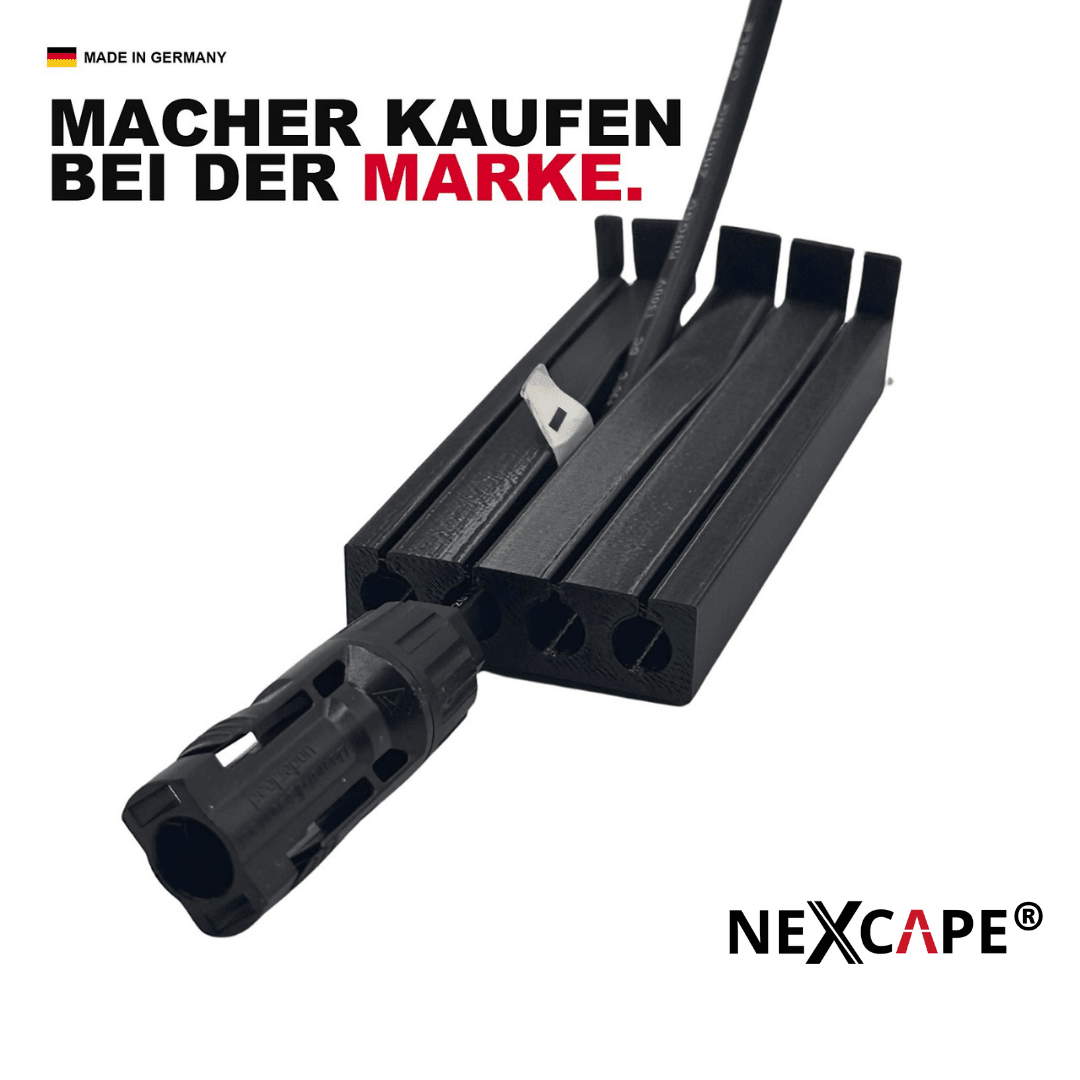
Die NEXCAPE®-Dachdurchführung aus flexiblem TPU, gefertigt in Deutschland, legt sich zwischen Kabel und Ziegel. Das Kabel liegt dann im Material statt auf der Kante. Dafür ist sie gemacht: als mechanischer Abriebschutz an der Ziegelkante.
Ein Dichtelement ist die Durchführung nicht. Für die Dichtigkeit deines Dachs sorgt wie gewohnt die Ziegeldeckung. Den MC4-Stecker musst du nicht abschneiden: Das Kabel wird mitsamt Stecker seitlich eingelegt. Mehr zu diesem Punkt steht im Ratgeber MC4-Stecker durchs Dach verlegen.
Welche Ausführung brauchst du und was kostet sie?
Die Zahl im Variantennamen ist die Anzahl der Kabel, keine Stückzahl. Preise je Stück, zuerst mit 19 % MwSt., dahinter mit Nullsteuersatz nach § 12 Abs. 3 UStG. Stand 02.10.2026, live aus unserem Shop.
| Ausführung | Passt für | 105 mm | 125 mm | 150 mm |
|---|---|---|---|---|
| 2 Kabel | 2 Solarkabel bis 7,5 mm Außendurchmesser | 7,01 € / 5,89 € | 9,98 € / 8,39 € | 12,36 € / 10,39 € |
| 2 Kabel + Erdungskabel | 2 Solarkabel bis 7,5 mm, dazu 1 Erdungskabel bis 9 mm Außendurchmesser | 7,60 € / 6,39 € | 11,17 € / 9,39 € | 12,96 € / 10,89 € |
| 4 Kabel | 4 Solarkabel bis 7,5 mm Außendurchmesser | 8,79 € / 7,39 € | 11,77 € / 9,89 € | 14,74 € / 12,39 € |
| 4 Kabel + Erdungskabel | 4 Solarkabel bis 7,5 mm, dazu 1 Erdungskabel bis 9 mm Außendurchmesser | 9,98 € / 8,39 € | 13,55 € / 11,39 € | 15,34 € / 12,89 € |
Entscheidend ist der Außendurchmesser mit Isolierung, nicht der Querschnitt in mm². Miss dein Kabel vor der Bestellung nach. Für eine einzelne dickere Zuleitung gibt es eine eigene Variante mit 9,5 mm Durchlass. Alle Ausführungen findest du auf der Produktseite PV-Dachdurchführung ohne MC4-Ausbau. Wie viele Durchführungen du für deine Anlage brauchst, rechnet dir die Auswahlhilfe vor. Erdungs- und Solarkabel an derselben Stelle: Das erklärt der Ratgeber Erdungskabel und Solarkabel gemeinsam durchs Ziegeldach.
Welche Länge passt zu deinem Dach?
Die Angabe 105, 125 oder 150 mm ist die Länge der Durchführung, nicht die Breite eines Ziegels. Welche Länge du brauchst, hängt davon ab, wie weit der obere Ziegel den unteren überdeckt. Diese Überlappung legt der Dachdecker beim Eindecken fest, deshalb kann sie beim selben Ziegelmodell auf zwei Dächern unterschiedlich ausfallen.
| Länge | Für welche Überlappung | Was wir dazu wissen |
|---|---|---|
| 105 mm | geringere Überlappung der Dachziegel | die kürzeste Länge; wenn der obere Ziegel den unteren nur wenig überdeckt |
| 125 mm | mittlere Überlappung | in unseren Supportfällen bei Braas Taunus Pfanne, Harzer Pfanne BIG und Rubin 11V empfohlen; Braas nennt für Taunus und Harzer Pfanne 75–108 mm Höhenüberdeckung, beim Rubin 11V hat der Kunde 85–90 mm gemessen |
| 150 mm | größere Überlappung | die längste Ausführung; wenn der obere Ziegel den unteren weit überdeckt |
Für eine feste Zuordnung „Überlappung X mm = Länge Y“ haben wir noch keine durchgehende Messreihe. Miss deshalb an deinem Dach nach und schick uns im Zweifel das Maß und ein Foto an support@nexcape.de. Welche Ziegelmodelle wir schon in echten Fällen hatten, steht im Ratgeber Durchführung für Braas-, Creaton- und Nelskamp-Ziegel.
Wie baust du die Durchführung ein?
- Ziegel anheben und die Durchtrittsstelle möglichst nah am Kabelverlauf wählen.
- Den darüberliegenden Ziegel anpassen: Bei fast allen Ziegeltypen musst du an der Durchtrittsstelle ein Stück ausflexen oder ausschleifen, damit kein Spalt bleibt. Wie das geht, zeigt die Anleitung Dachziegel für die Kabeldurchführung ausschneiden.
- Kabel einlegen, die MC4-Stecker bleiben dran.
- Durchführung mit der Nase im Ziegel einhängen und den Ziegel wieder auflegen.
Auf dem Dach selbst gilt dasselbe Prinzip: Das Kabel sollte nicht lose über die Ziegel laufen. Am 40×40-mm-Aluprofil der Unterkonstruktion hältst du es mit unseren PV-Kabelhaltern für 40×40-mm-Profile in der Spur.
Welche Durchführung für Braas Rubin 11V? Eine echte Frage aus unserem Support
Ende August 2026 wollte ein Kunde von uns wissen, welche Durchführung er für den Braas Rubin 11V braucht. Eine Länge haben wir ihm darauf nicht sofort genannt. Aus dem Ziegelmodell allein folgt sie nicht, weil die Überlappung vom Eindecken abhängt.
Unsere Antwort war deshalb zuerst eine Bitte: die Überlappung an seinem Dach messen. Er hat nachgemessen und kam auf 85 bis 90 mm. Auf Basis dieses Werts haben wir ihm die Länge 125 mm empfohlen. Genau so gehst du auch vor: erst messen, dann bestellen.
Ein zweiter Fall zum Anpassen des Ziegels: Ein Kunde mit Braas Taunus Pfanne merkte nach der Bestellung an, dass die Mulde seines Ziegels recht schmal ist und er am darüberliegenden Ziegel den Steg wegflexen muss. Das ist der Normalfall: Bei fast allen Ziegeltypen muss der obere Ziegel an der Durchtrittsstelle ein Stück angepasst werden. Die Nase der Durchführung dient dem Einhängen, sie ersetzt das Anpassen nicht. Derselbe Kunde hat die Durchführungen vor der Montage am Boden an einem Ziegel ausprobiert. Das empfehlen wir dir auch.
Häufige Fragen
Muss ich den MC4-Stecker abschneiden? Nein. Das Kabel wird mitsamt MC4-Stecker seitlich in die Durchführung eingelegt.
Welcher Kabeldurchmesser passt? Solarkabel bis 7,5 mm Außendurchmesser, Erdungskabel bis 9 mm Außendurchmesser. Entscheidend ist der Außendurchmesser mit Isolierung, nicht der Querschnitt in mm². Miss dein Kabel vor der Bestellung nach.
Welche Länge brauche ich? Das hängt von der Überlappung deiner Dachziegel ab: Mehr Überlappung bedeutet eine längere Durchführung. Miss das Maß an deinem Dach oder schick uns ein Foto an support@nexcape.de.
Muss am Ziegel etwas bearbeitet werden? Ja, bei fast allen Ziegeltypen muss der darüberliegende Ziegel an der Durchtrittsstelle ein Stück ausgeflext oder ausgeschliffen werden, sonst bleibt ein Spalt.
Ersetzt die Durchführung die Abdichtung am Dach? Nein. Die Durchführung ist ein mechanischer Abriebschutz, kein Dichtelement. Für die Dichtigkeit sorgt wie gewohnt die Ziegeldeckung.
Passt das für mein Balkonkraftwerk? Ja. Die Durchführung ist für Balkonkraftwerke und größere PV-Anlagen gleich aufgebaut. Entscheidend sind die Zahl der Kabel und ihr Außendurchmesser.
Fazit: Lohnt sich der Abriebschutz?
Die Ziegelkante ist die Stelle, an der ein Solarkabel über die Jahre am meisten aushalten muss. Eine Durchführung in der passenden Länge, ein angepasster Ziegel und Kabel im richtigen Außendurchmesser sind der Weg, das Kabel dort zu schützen. Alle Längen und Ausführungen findest du unter PV-Dachdurchführungen.
Passende PV-Dachdurchführungen aus unserer Manufaktur: Alle PV-Dachdurchführungen · Ausführung ohne MC4-Ausbau · 105 mm · 125 mm für die Frankfurter Pfanne · 150 mm
📘 Kompletter Überblick: PV-Solarkabel sicher durchs Ziegeldach führen – der große Ratgeber bündelt Größe, Montage, Fehler und FAQ.
Markenrechtshinweis: Genannte Produkt- und Markenbezeichnungen Dritter sind Eigentum der jeweiligen Inhaber. Die Nennung dient ausschließlich der Beschreibung der Produktkompatibilität (§ 23 MarkenG / Art. 14 EU-MarkenVO). Es besteht keine geschäftliche Verbindung zwischen NEXCAPE® (Roos Enterprises UG, Wildberg) und den genannten Herstellern.